
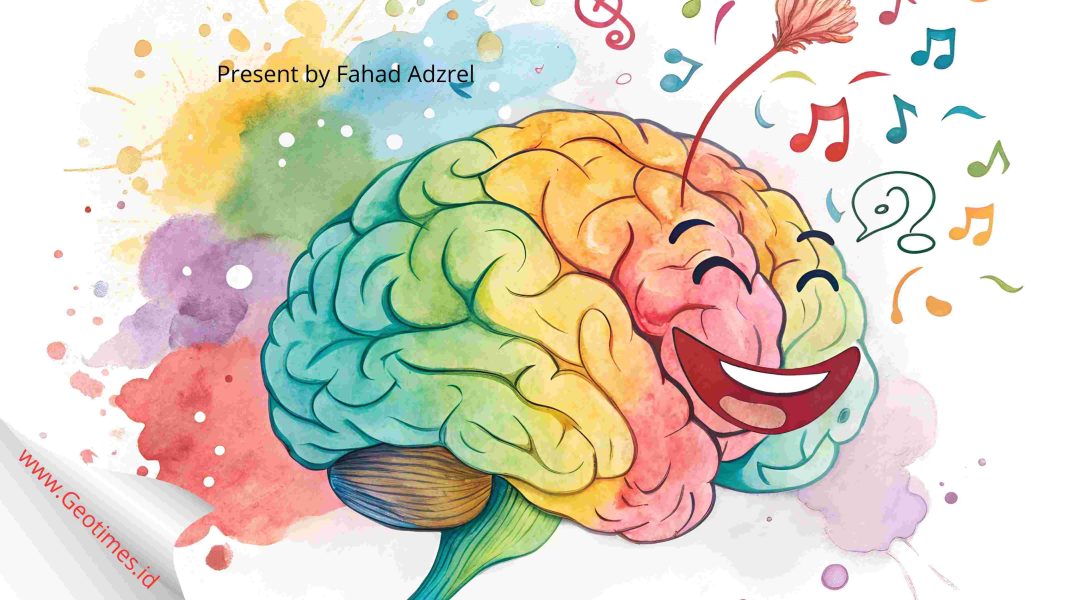

Introduction: The Eternal Internal Battle
The journey from youth to adulthood is marked by a profound internal negotiation between the sober voice of reason and the compelling surge of emotion and desire. Contemporary neuroscience frames this as the maturation race between the impulsive, emotion-driven limbic system and the rational, decision-making prefrontal cortex (Casey, Getz, & Galvan, 2008). This battle, however, is not confined to the individual psyche; it spills over into the public square, defining the health of our societies and the quality of our leadership. In the digital age, this dynamic manifests in two powerful, contrasting phenomena: the emotionally charged “cancel culture” of social media and the data-driven, stability-focused public policy of states like China. This essay argues that a sustainable human existence and a just society require a balance between these forces a balance that modern frameworks often miss but which Islamic teachings provide with profound clarity.
The Scientific Basis: The Nahkoda and the Ombak in Our Brains
The human brain is not a monolithic entity but a complex hierarchy. The limbic system, often called the “old brain,” is the seat of emotions, instincts, and hormonal drives the ombak (waves) of our internal sea. It seeks immediate gratification and reacts fiercely to threats. The prefrontal cortex, evolutionarily newer, acts as the nahkoda (captain), capable of long-term planning, impulse control, and ethical reasoning (Goldstein, 2019). In youth, the “waves” are powerful, while the “captain” is still training. A well-developed personality is not one that suppresses the waves but where the captain has learned to navigate them, harnessing their energy without being capsized by them. Failure to achieve this balance leads to personal and social dysfunction, as seen in the extremes of our modern landscape.
Case Study I: Cancel Culture – The Tyranny of the Unbridled Limbic System
Cancel culture can be understood as a societal-scale eruption of the limbic system. It is a phenomenon driven by raw moral emotion righteous anger, outrage, and a desire for social purity. While often originating from a legitimate place of seeking justice, its execution is typically impulsive, lacking the due process and proportional response governed by the “prefrontal” principles of justice. It operates on a binary logic: guilty or innocent, with punishment (social ostracization, deplatforming) being immediate and severe (Ng, 2020). This is emotion (hormonal outrage) overpowering reason (nuance, context, redemption). The result is a digital society that is often more performative than restorative, prioritizing the catharsis of the collective over the complex humanity of the individual.
Case Study II: China’s Public Policy – The Logic of the Prefrontal State
In stark contrast, the Chinese government’s approach to governance, particularly in its use of mass surveillance and social credit systems, represents a hyper-rational, prefrontal model. It is a system built on data, predictability, and social stability. The emotional, unpredictable, and “hormonal” elements of human behavior are seen as risks to be managed and engineered out of the system (Creemers, 2018). Here, state logic seeks to completely subdue individual emotion and spontaneity in the name of collective order. This creates a society that is stable and efficient on the surface but potentially stifles the very spirit, creativity, and moral conscience that define our humanity. It is reason without a heart, a captain who has thrown the turbulent sea into a sterile, controlled tank.
An Islamic Synthesis: The Balanced Self as the Foundation for a Just Society
Islam does not dismiss this internal conflict but provides a comprehensive framework for its resolution, aiming to create a wasatiyyah (balanced) individual. The Quran repeatedly calls upon humans to use their ‘aql (intellect/reason) to reflect on creation and divine signs (Quran 2:164, 3:190). This is the sanctification of the prefrontal function. Simultaneously, it does not deny the nafs (the self/soul with its desires and emotions). Instead, it guides its refinement, moving the nafs from its state of ammarah bis-suu’ (the soul that incessantly commands to evil) towards *mutma’innah* (the tranquil soul) (Quran 12:53, 89:27).
The ultimate model is the Prophet Muhammad (PBUH), who was described with the Quranic term Rauf Rahim (kind and merciful) a deeply emotional and compassionate capacity while also being the supreme strategist and judge, employing impeccable reason. This is the perfect integration.
The Islamic legal process itself mirrors this balance. While the Hudud (prescribed punishments) represent the immutable, rational law, their application is surrounded by rigorous conditions and mechanisms for mercy (shubhat), ensuring that the coldness of the law is always tempered by the warmth of divine mercy and contextual wisdom. It is a system designed to be neither purely emotional nor purely rational, but just.
Conclusion
The challenge of the modern world is not a choice between the unfeeling logic of a surveillance state and the unchecked outrage of a digital mob. Both are imbalanced and dehumanizing. The true path forward is to rediscover the timeless wisdom that teaches us how to be human. Islam offers this by elevating reason (‘aql) as a divine trust and disciplining the soul (nafs) as a spiritual duty. It calls for a heart that feels, a mind that thinks, and a soul that is at peace a holistic equilibrium where the individual, and by extension society, can fulfill their purpose: to live justly, compassionately, and in conscious submission to the source of all balance.

