
In today’s world, food often feels like something that simply appears whenever we want it. If we feel hungry, we open a food delivery app, visit a convenience store, or buy something from the nearest supermarket. For many young people, this convenience has become completely normal. Food is fast, accessible, and always available. But behind this convenience lies a system that is far more complex—and sometimes more fragile—than we realize.
Most of us rarely think about where our food actually comes from. Vegetables might travel hundreds of kilometres before reaching urban markets. Packaged meals are produced in factories and distributed through long supply chains. When everything works smoothly, the system feels invisible. But when disruptions occur—whether because of economic instability, transportation problems, or climate change—the vulnerability of this system becomes clear.
Because of this, conversations about food security are becoming more common around the world. Governments discuss agricultural strategies, economists analyse global food markets, and international organizations publish warnings about future food shortages. Yet in many of these discussions, one important element is often overlooked: the role of ordinary households.
Food security does not exist only at the national level. It also exists at the household level. Every family that has the ability to produce or process some of its own food contributes to a more resilient society. When households possess even basic knowledge about growing and preparing food, communities become less dependent on long and fragile supply chains.
For a country like Indonesia, the idea of household food independence should feel very familiar. Not long ago, it was common for families to grow small amounts of food around their homes. A backyard garden with chili plants, herbs, and vegetables was a normal part of daily life. Many ingredients used in cooking were produced locally or prepared in home kitchens.
Traditional foods such as tempeh, sambal, fermented vegetables, and herbal drinks were often made by families themselves. These activities were not considered special or unusual. They were simply part of how people lived. Knowledge about food production and processing was passed down through generations.
However, as cities expanded and lifestyles changed, many of these practices gradually faded away. Urbanization reduced available space for gardens. Busy work schedules left less time for cooking and food preparation. Supermarkets and convenience stores made processed food widely available.
The modern food system offers undeniable advantages. It provides variety, efficiency, and convenience. Yet it also creates a new kind of dependence. Many households have lost the basic skills that once allowed them to produce or process their own food. As a result, food has become something we mostly consume rather than something we actively participate in creating.
For young people growing up in modern cities, reconnecting with food production might seem unusual at first. Gardening, fermenting, or preserving food may sound like activities from the past. But these practices are becoming increasingly relevant again—especially as societies search for more sustainable and resilient ways of living.
The good news is that building household food independence does not require advanced technology or large amounts of land. In many cases, simple tools and small spaces are enough to begin.
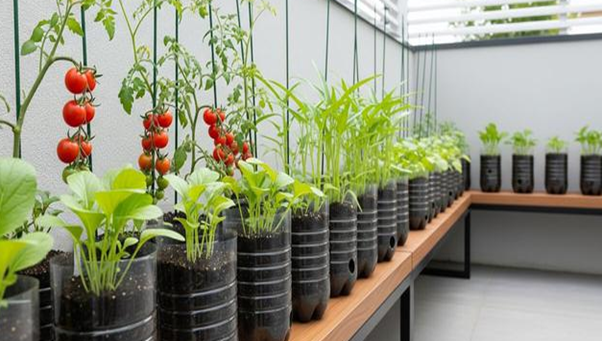
One of the easiest starting points is growing food at home. Even in urban environments, it is possible to grow a surprising variety of plants. Small containers, polybags, or recycled plastic bottles can be used to grow vegetables and herbs in balconies, windowsills, rooftops, or narrow yards.
Plants such as chili peppers, tomatoes, spinach, water spinach, basil, scallions, and lemongrass are particularly suitable for home gardening. These plants grow relatively quickly and are frequently used in everyday cooking. A few pots of these ingredients can already make a noticeable difference in the kitchen.
For young people who have never tried gardening, the process can be surprisingly rewarding. Watching a plant grow from a tiny seed into something edible creates a sense of connection that buying food cannot replicate. Watering plants every morning, checking their growth, and eventually harvesting them becomes a small but meaningful routine.
There is also a psychological benefit. Gardening slows things down. In a digital world filled with constant notifications and fast-paced information, caring for plants can offer a calming, grounding experience. It teaches patience and attentiveness—qualities that are often missing in modern life.
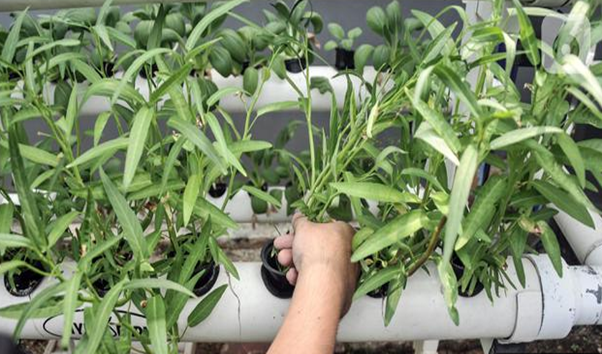
For households with extremely limited space, simple hydroponic systems offer another option. Hydroponics allows plants to grow in water enriched with nutrients rather than soil. While some commercial hydroponic systems can be expensive, very simple versions can be built using recycled materials.
Plastic bottles, PVC pipes, or small containers can serve as growing structures. Nutrient solutions can be purchased or mixed using basic ingredients. With a little experimentation, leafy greens such as lettuce, spinach, and pak choi can grow successfully in these systems.
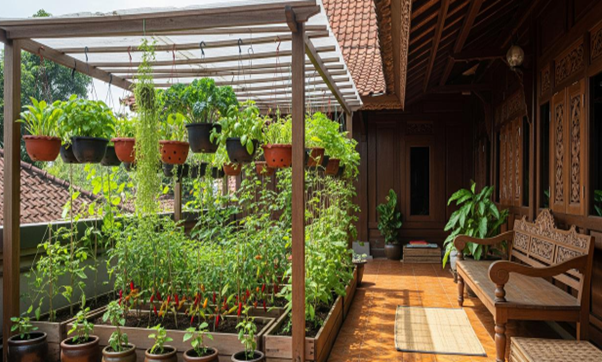
Urban farming projects around the world have shown that even small spaces can become productive food sources when used creatively. A balcony that once held only furniture can turn into a mini vegetable garden. A rooftop that was previously unused can support rows of container plants.
However, food independence is not only about growing ingredients. It also involves learning how to prepare and process food in simple ways. Over time, many households have become accustomed to buying ready-made products such as sauces, snacks, yogurt, and fermented foods. While convenient, this habit gradually reduces the role of home kitchens as places of creativity and learning.
In reality, many foods that people regularly buy can be prepared easily at home. Making sambal requires only fresh chili, garlic, salt, and a few additional spices. Yogurt can be produced by heating milk and introducing beneficial bacteria, then allowing fermentation to occur in a warm environment.
Bread, often considered complicated, can actually be made with only four ingredients: flour, water, yeast, and salt. Even tempeh—one of the most iconic foods in Indonesia—can be produced at home using boiled soybeans and fermentation starter.

These activities do not require professional equipment. A simple kitchen setup is usually enough. More importantly, they provide an opportunity for people to reconnect with the process of transforming raw ingredients into nourishing food.
Another important skill that deserves renewed attention is food preservation. In earlier generations, preserving food was an essential household practice. Without refrigeration technology, families relied on drying, fermenting, pickling, and salting to keep food from spoiling.
Many of these techniques remain extremely useful today. Drying chili peppers in the sunlight can extend their shelf life for months. Fermenting vegetables into pickles not only preserves them but also enhances their flavour and nutritional value. Herbs can be stored in oil or vinegar for later use.
Learning these techniques reduces food waste and allows households to maintain small reserves of ingredients. In times of price fluctuations or supply disruptions, preserved foods can provide valuable flexibility.
Beyond individual households, an equally important dimension of food independence is community. When people begin growing and preparing food at home, they often discover that collaboration with neighbours and friends makes the experience even richer.
Community gardens, for example, are becoming increasingly popular in urban areas. These shared spaces allow residents to cultivate plants together, exchange gardening knowledge, and share harvests. Even small vacant lots can become productive gardens when communities organize themselves.
For young people, community-based food projects can be particularly inspiring. They provide opportunities to learn practical skills while also building friendships and social networks. Working together in a garden creates a sense of shared purpose that is often missing in modern urban environments.
Community initiatives also encourage knowledge exchange across generations. Older residents may possess valuable experience in traditional farming or cooking methods, while younger participants bring creativity and technological skills. Together, they can rediscover practical knowledge that might otherwise be lost.
Local food communities can also organize small events such as seed exchanges, cooking workshops, and urban farming demonstrations. These gatherings help spread awareness and encourage more households to participate in food production.
In some neighbourhoods, community gardens have even evolved into local food markets where surplus harvests are shared or sold informally. Such systems strengthen local economies while reducing reliance on distant suppliers.
Digital technology can also play a supportive role in these movements. Social media groups allow gardeners to exchange tips, share photos of their plants, and troubleshoot problems together. Online tutorials provide easy access to information about hydroponics, composting, fermentation, and other food-related skills.
For young people, especially, combining traditional food practices with modern communication tools creates exciting possibilities. A small urban gardening project can quickly inspire others when shared online. What begins as a personal hobby can gradually evolve into a larger community initiative.
Yet despite all these possibilities, there is one obstacle that often appears before any of these ideas can even begin: laziness.
Many people say they want to try growing plants, but they feel too lazy to start. Some say they do not know how, but they are also too lazy to ask questions. Others claim they lack information, even though the internet provides countless tutorials, videos, and guides. Some people even have access to powerful digital tools and artificial intelligence that can answer almost any practical question—yet they still hesitate to explore.
Laziness can appear in many forms. There is the laziness of not wanting to learn something new. The laziness of not wanting to try and possibly fail. The laziness of not wanting to water plants every day. The laziness of not wanting to cook when ordering food feels easier.
There is also the laziness of postponing action: “I’ll try next week,” or “maybe someday.” Over time, these small delays accumulate, and the idea of starting becomes increasingly distant.
The biggest barrier to household food independence is rarely a lack of land, lack of tools, or information. The biggest barrier is often the simple unwillingness to begin.
The solution, however, is also surprisingly simple.
Just do not be lazy.
Curiosity must replace hesitation. If we do not know how to grow a plant, we can ask someone who does. If we are unsure about a recipe, we can search for it online. If we fail the first time, we can try again.
Every skill begins with small experiments. A plant might die because of too much water. Bread might not rise properly the first time. Yogurt might taste strange in the first attempt. These experiences are normal parts of learning.
The difference between people who succeed and those who never begin is not intelligence or resources. It is simply the willingness to try.
Young people today have access to more knowledge than any generation in history. Information about gardening, cooking, fermentation, and food preservation is available everywhere—from books to online videos to digital assistants. Learning opportunities are no longer limited by geography or formal education.
What matters now is motivation.
If curiosity and discipline replace laziness, remarkable things can happen. A single pot of chili can become a small garden. A simple cooking experiment can become a passion for homemade food. A conversation with neighbours can become a community gardening project.
Food independence does not start with large policies or complex infrastructure. It begins with individuals who decide to act.
Sometimes the most powerful change begins with the simplest decision: stop waiting, stop postponing, and stop being lazy.
Plant something. Cook something. Learn something.
And from those small actions, a more resilient and connected food future can grow.